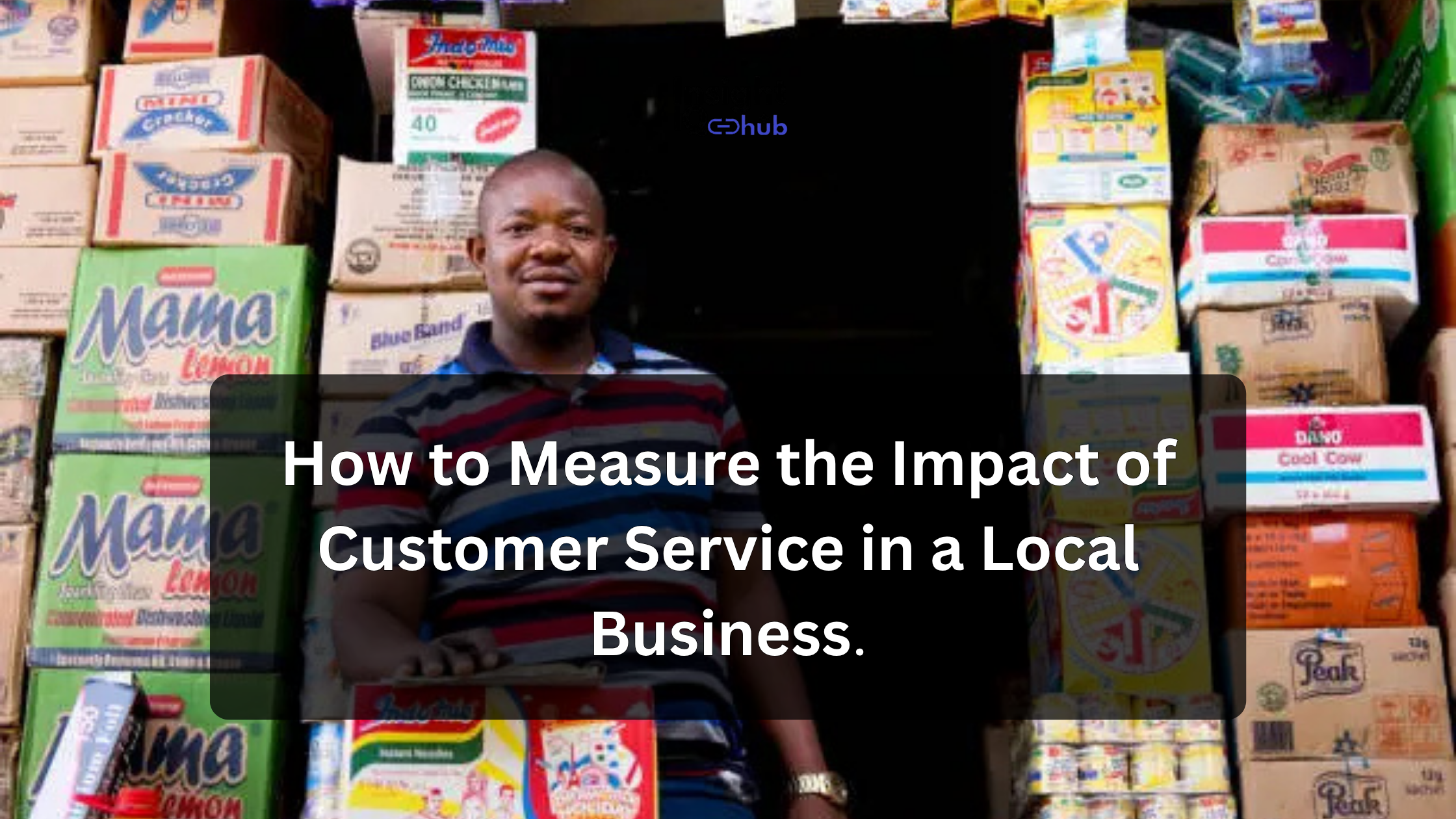
If you run a local business in Nigeria—whether it’s a salon, spa, boutique, or food spot—you’ve probably said this before: “Our customer service is good.”
But here’s the real question: can you prove it… and more importantly, can you improve it?
Understanding how to measure the impact of customer service is what separates businesses that survive from those that consistently grow through referrals and repeat customers.
Let’s break it down in a way that actually works for your day-to-day operations.
Why Measuring Customer Service Is Non-Negotiable

In local businesses, your reputation spreads fast, through word of mouth, WhatsApp groups, and online reviews.
So if you’re not tracking your service quality, you’re essentially guessing. And guessing can cost you loyal customers.
5 Practical Ways to Measure Customer Service Impact
1. Track Customer Satisfaction (CSAT)
After every service, ask a simple question:
- “How would you rate your experience today?”
You can do this via:
- WhatsApp message
- A quick in-store question
- Google Form
Why it is important: It gives you direct insight into how customers feel, not just what they buy.
2. Monitor Repeat Customers
This is one of the most powerful customer service metrics for small business owners.
| Metric | What It Tells You | Why It Is Important |
|---|---|---|
| First-time customers | New interest | Growth potential |
| Repeat customers | Satisfaction & loyalty | Real business stability |
If people keep coming back, your service is working.
3. Pay Attention to Reviews & Feedback
Check:
- Google reviews
- Instagram comments
- Direct messages
Look for patterns:
- Are people complaining about wait time?
- Are they praising your staff attitude?
This is raw, honest feedback you didn’t have to ask for.
4. Measure Response Time
How fast do you reply:
- Instagram DMs
- WhatsApp inquiries
- Calls
Speed is part of customer experience.
A delayed response can easily send a customer to your competitor down the street.
5. Connect Service to Revenue
This is where customer service ROI for small business becomes clear.
Ask yourself:
- Are customers spending more per visit?
- Are referrals increasing?
- Are slow days becoming less frequent?
If your service improves, your income should reflect it.
Simple Tools You Can Start Using Today

You don’t need expensive software. Start small:
- Insight IQ Hub for quick feedback
- Google Forms for structured surveys
- Notebook or spreadsheet to track complaints
- Instagram story polls for engagement
Read also: The Best Customer Feedback Tools for Local Businesses (2026 Guide)
How to Improve Customer Satisfaction in a Local Business
Once you start tracking, the next step is action:
- Identify repeated complaints
- Train your staff based on feedback
- Fix small issues quickly (like delays or poor communication)
- Reward staff who deliver excellent service
Common Mistakes to Avoid
Ignoring negative feedback
- Only focusing on sales, not experience
- Not asking customers for input
- Overcomplicating your tracking process
Keep it simple and consistent.
Quick Action Checklist
- Ask at least one customer feedback question daily
- Track repeat customers weekly
- Review complaints monthly
- Adjust your service based on real data
Conclusion
Learning how to measure the impact of customer service isn’t about complex systems. It’s about paying attention to what your customers are already telling you.
When you listen, track, and improve consistently, you don’t just get happier customers…
You get loyal customers who bring more customers.
And in a local business, that’s everything.
Read also: The Only Customer Feedback Metrics Local Businesses Should Track